
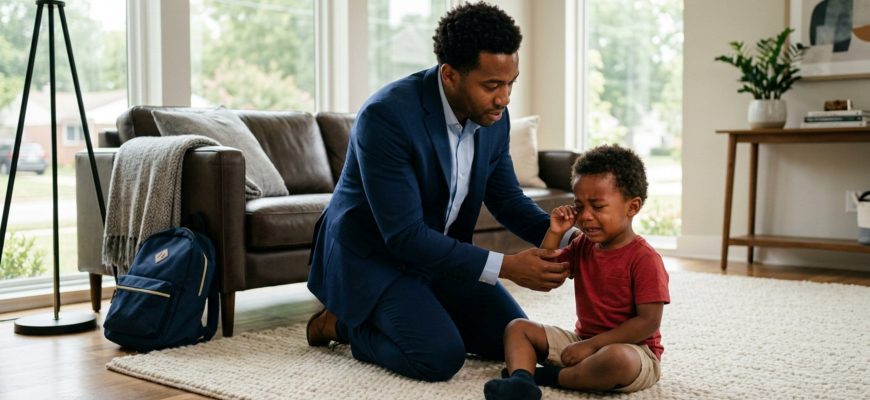
A Sunday pickup that felt wrong from the very beginning
Sunday evenings in Orange County always seemed to carry a quiet heaviness that was hard to name. Even after the sun had slipped below the horizon, the heat lingered as though it had been sealed into the sidewalks and the silent streets. Overhead, the sky faded by degrees into muted bands of gold and gray. From a distance, the neighborhood looked calm. Up close, though, it felt unfinished, as if the week itself was refusing to let go.
For Michael, Sundays had never been simple. They were not the peaceful ending to a family weekend. They were the evenings when his six-year-old son was brought back to him under the custody arrangement set after the divorce. Michael had turned small contracting jobs into a steady construction business, yet no amount of success could ease the tightness that separation had left inside him. He followed every rule, believing that responsibility might eventually put things back in order. Still, each Sunday left him uneasy.
At 6:45 p.m., Michael guided his dark blue SUV onto a quiet street in Anaheim. The houses were modest, their paint weathered, their porch lights already flickering on. At the end of the block stood the duplex.
It was the place where Noah, his son, spent every other week.
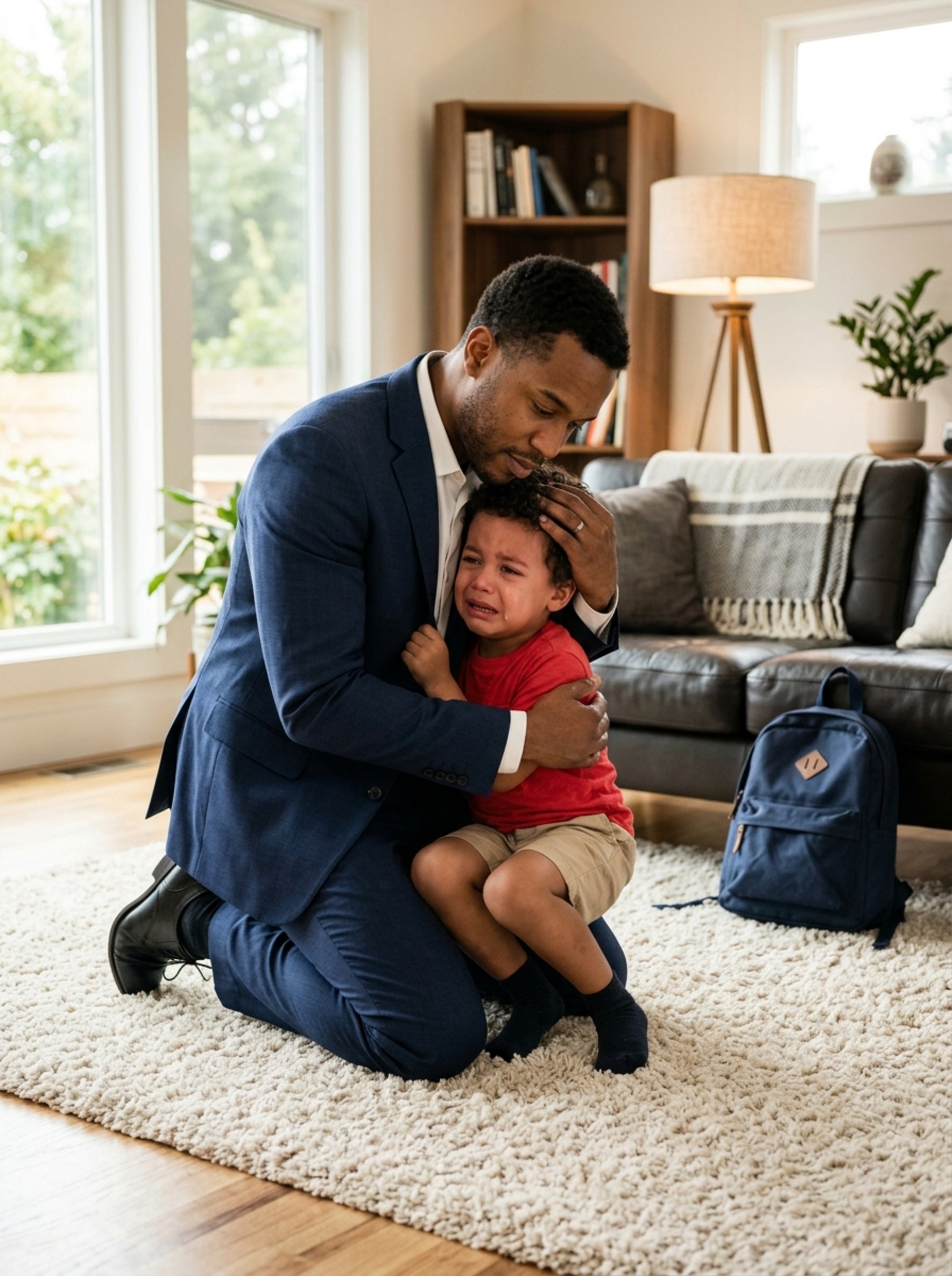
Michael noticed everything, yet he kept his mouth shut.
When the front door opened, the wrongness of the moment hit him at once. Noah usually burst outside grinning, talking before he even made it to the SUV. This time he came forward slowly, carefully, as if each movement had to be measured. His shoulders were tight. The bright, restless energy that normally surrounded him was gone. Michael sensed it before he could name it.
“Hey, buddy,” Michael said, lowering himself a little. “You okay?”
“Yeah, Dad,” Noah answered too fast.
There was no hug. No excited rush toward him. And when Michael reached for the boy’s backpack, Noah flinched. The tiny movement made something hard twist in Michael’s stomach.
“What happened?” he asked gently. “Did you fall?”
Noah glanced back toward the house. “I just… hurt a little. I was playing.”
But his voice lacked its usual openness. It sounded practiced. Borrowed. Wrong.
The walk to the car took too long. Noah moved as though every step pulled at something sore. At the passenger door, he gripped the frame longer than usual before easing himself inside. Michael started the engine, but he didn’t pull away. In the rearview mirror, he saw his son trying far too hard to look normal.
As they drove, every crack in the pavement and every small dip in the road made Noah tense beside him. Michael reached over and shut off the radio.
“Do you want me to call a doctor?” he asked.
“No,” Noah answered too quickly.
After that, the car fell quiet.
Michael kept his eyes on the road, though his hands tightened on the wheel. “Did someone hurt you?”
Noah’s whole body went rigid. “No,” he whispered.
But the word did not carry truth. It carried terror.
By the time they reached home, Michael knew this could not be brushed away. Noah didn’t dash inside the way he usually did. He lingered near the entry, withdrawn and silent, as if even the familiar hallway no longer felt safe.
Inside, Michael lowered himself to one knee in front of him.
“You can tell me anything,” he said softly.
Noah shook his head. “I don’t want to sit down… it hurts.”
Those few words shifted everything.
Carefully, Michael led him into the bathroom and turned on the light.
“You’re safe now,” he murmured. “Just tell me the truth.”
Tears filled Noah’s eyes.
“She said… not to tell…”
“Who said that?”
“Mom… and her boyfriend.”
Michael went completely still, forcing every reaction back down.
“What did they tell you to say?”
“That I only got hurt while we were playing.”
Pain clenched through Michael’s chest, but his voice stayed steady.
“You didn’t do anything wrong. I believe you.”
A short time later, Michael understood this was not something minor.
He stepped into the hallway and called 911.
“My son needs medical help,” he said, his voice firm. “And someone told him to stay silent.”
The ambulance arrived quickly. In the back, beneath the sharp white lights, Noah clung to Michael as though letting go might make the whole world vanish.
“Are you coming with me?” he asked.
“Everywhere,” Michael replied.
At the hospital, the night became a blur of exams, careful questions, and solemn faces. Michael stayed beside him through all of it. When Noah finally whispered, “You didn’t leave me…” Michael folded the boy’s small hand in his.
“I’m not going anywhere.”
The following days brought more tests, inquiries, and painful choices. Michael could not erase every fear at once, so he did the only thing that mattered: he stayed. Slowly, Noah began to trust sleep again. Some nights he still called out, and Michael answered each time from nearby.
“I’m here.”
A year later, Sunday evenings were different. They ate dinner outside while the air cooled around them, and peace began to fill the space where dread had lived. Noah laughed softly, then looked up.
“Thank you for believing me.”
Michael drew him close.
“Always.”
For the first time, Sunday was not heavy. It felt like home.
In that honest quiet, Michael understood what he would carry forever: a child’s silence is never empty, and what cannot be spoken often matters more than what can.