
The driver’s patience was clearly wearing thin.
“Sir, if you can’t get seated properly, I can’t let you continue the trip.”
“I bought my ticket,” the man shot back under his breath. “I’ll manage.”
The other passengers stared, uncomfortable and silent. Susan recognized that expression immediately—the rigid jaw, the guarded eyes. It was the look of someone hurting deeply, doing everything possible to disguise it with pride.
She stepped into the aisle.
“I’m a nurse,” she said gently. “Would you like a hand?”
“I’m fine,” he replied too quickly. “I don’t need charity.”
“This isn’t charity,” Susan answered evenly.
And before she could reconsider the consequences, she added, “I have a first-class seat. We can switch.”
He refused at once, but Susan lowered her voice.
“I’ve had a terrible day. Let me do at least one decent thing. Please.”
Something in his face shifted—resistance giving way to exhaustion. The driver reissued the tickets, and Susan paid the fare difference. It meant fewer meals, more worry, and yet another sacrifice she truly couldn’t afford. Still, when she placed the new ticket in his scarred hand, he accepted it as if it were something priceless.
“You have no idea what you’ve just done for me,” he murmured.
She helped him settle carefully so the tightened, burned skin along his arms and neck wouldn’t pull painfully against the seat. He introduced himself as Marcus Ramirez. Gradually, haltingly, he shared his story: eighteen months earlier, a house fire had left him badly injured—and had taken his wife and little daughter in the same blaze.
Susan listened without interrupting. After a while, she admitted that she had been fired that very morning.
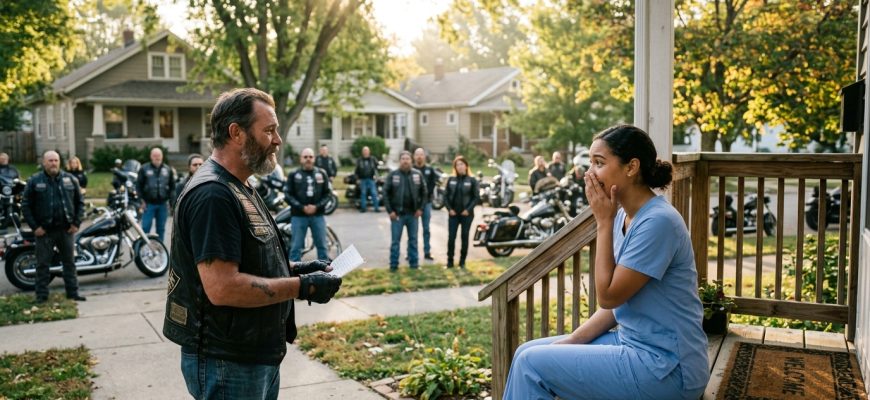
Marcus reached into the pocket of his leather vest and pulled out a worn card. With shaking fingers, he wrote something on the back and pressed it into her palm.
It read: “In the brotherhood, every debt is remembered.”
“You didn’t just give up a seat,” Marcus said quietly. “You gave me back my dignity.”