

“A businessman installs hidden cameras to protect his paralyzed little girl — until he sees what the housekeeper is REALLY doing.”
Daniel had always believed the harshest sound of his life would be the shriek of tires on Marginal Pinheiros that terrible afternoon. He was wrong. The cruelest sound was what followed the crash — the silence. A thick, suffocating quiet that seeped into every crack of his São Paulo villa and refused to leave. It settled into the upholstery, hid behind the curtains, lingered in the corners of every room as if the house itself had learned how to breathe grief.
After Emily died, Daniel moved through his days as though he were living inside a museum dedicated to his own heartbreak. From the outside, everything appeared pristine — polished floors, manicured garden, immaculate glass. Inside, he was splintered beyond repair.
He woke at five each morning without an alarm, dragged out of sleep by the same relentless nightmare. It replayed like a punishment: the runaway truck, the violent impact, the screams — and then the void. Every time, he opened his eyes with two fragile seconds of relief, almost convinced it had only been a dream. Then he would glance at the empty side of the bed where Emily used to sleep, and reality would crash down on him all over again.
There was no luxury of staying in bed. He had Lily.
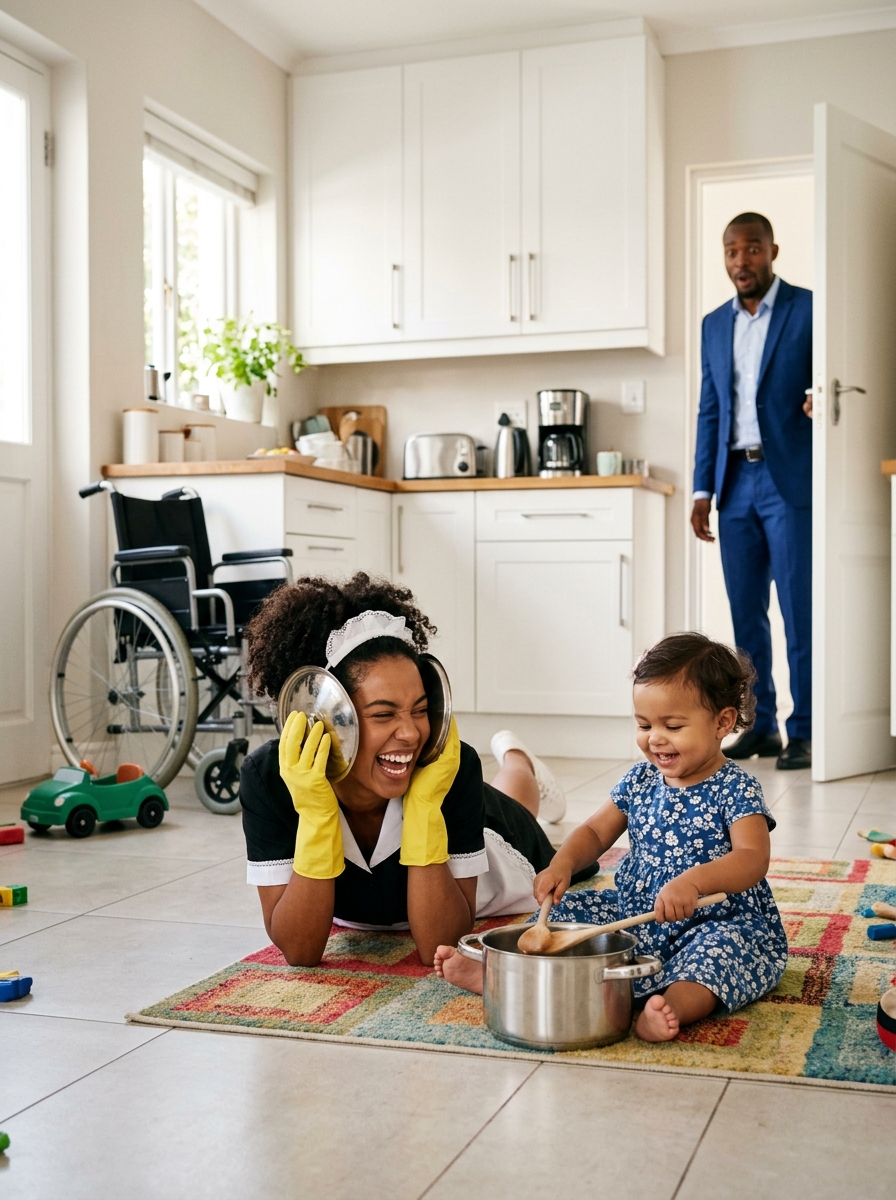
She was eleven months old when the accident happened — the only living piece left of that shattered day. Doctors spoke in complicated terms about spinal trauma and nerve damage. Daniel heard the words but refused to absorb them. All except one sentence, which branded itself into his mind: “She may never walk.”
The house gradually filled with specialized equipment — supportive seats, therapy cushions, modified toys that no longer coaxed the same bubbling laughter from his daughter. Before the accident, Lily had been like any other baby: kicking at the air, twisting to grab her tiny feet, erupting in giggles whenever Emily kissed her belly. Afterward, her legs seemed foreign, as if they belonged to someone else. When Daniel held her, she weighed almost nothing — yet in his arms she felt as heavy as the world itself.
The first months blurred together into a haze of conference calls and midnight feedings, million-dollar contracts and diaper changes. Daniel tried to divide himself into two separate men: the tech entrepreneur who couldn’t afford to pause his company, and the father who couldn’t escape his grief. Business partners gently suggested he take time off. He would smile and promise to “consider it,” though he knew the truth. Work was the only force keeping him upright. If he stopped moving, sorrow would devour him whole.
Then came the caregivers — and their departures.
The first lasted three days before admitting she “wasn’t prepared for this.” The second saw Lily’s tears and the long list of medical instructions and suddenly developed a “family emergency.” The third endured a week. The fourth, two. The fifth left in tears, whispering words that burned into Daniel’s memory: “Sir, I can’t carry this weight.”
Each resignation felt like abandonment all over again. Not just of Lily — but of hope itself.
So when the doorbell rang that Tuesday morning, Daniel almost ignored it. He assumed it was a courier, another delivery he didn’t remember ordering. But when he opened the door, he found a slender young woman standing on the step. Her dark hair was pulled back into a simple ponytail. She wore worn jeans and a crisp white blouse that looked defiantly clean against the world. She couldn’t have been more than twenty-five. Her eyes held something striking — a quiet determination that did not ask permission to exist.
“I’m here about the job,” she said, her voice carrying a faint countryside accent. “I saw your advertisement.”
Daniel studied her carefully, suspicion rising automatically — a reflex grief had trained into him. Inside his head, one voice warned, Don’t trust her. Another answered, You need help.
He stepped aside and let her in.
He did not soften the truth. He told her his wife had died. He explained that his baby was paralyzed and required constant attention, patience, and genuine care. He admitted several employees had already quit. And though he had never dared say it aloud before, he confessed he didn’t know how much longer he could endure this alone.
The young woman listened without interrupting. She didn’t display exaggerated sympathy or visible fear. She simply nodded.
“May I see her?” she asked quietly.
In the nursery, Lily lay awake in her crib, staring at the ceiling with large brown eyes she had inherited from Emily. Those eyes always pierced Daniel’s chest; they were a living reminder of what he had lost. The young woman approached slowly, as if even the air around the crib required gentleness.
“Hi there, princess,” she murmured.
And then something happened that Daniel had not witnessed in weeks.
Lily smiled.
Not a reflex. Not a random twitch. A real smile — luminous, intentional, as if she recognized something warm and safe standing before her.
Daniel froze. The beauty of the moment almost offended him. Why her? What was it about this stranger?
“I’ll take the job,” the young woman said, never lifting her gaze from the baby. “When would you like me to start?”
“Tomorrow,” Daniel replied too quickly, afraid that hesitation would make her change her mind.
That night, sleep eluded him. The house lay still, yet his thoughts churned violently. His unease wasn’t simple distrust — he had grown accustomed to distrusting everyone. It was something subtler. A sense that the young woman, Olivia, carried unspoken depths.
Or perhaps it was he who was hiding something — the terror of placing his daughter’s fragile life into someone else’s hands again.
At three in the morning, he made a decision that filled him with both strength and shame. He ordered discreet security cameras. Six of them. Small, nearly the size of coins. “For peace of mind,” he told himself. “For Lily’s protection.”
But deep down, he knew it was also about control — about the mistrust he could not relinquish.
When the cameras arrived, he installed them personally, moving through the house like a man performing a secret ritual. One was concealed inside the living room clock. Another within the kitchen vent. A third hidden in a decorative sculpture. The most important one he placed inside the nursery closet, angled carefully toward the center of the room.
He configured everything to upload to the cloud, accessible instantly from his phone. When he finished, he stood in the middle of the villa with an odd sensation creeping over him — as though the house were staring back.
Monday came. Olivia arrived precisely on time. Daniel was already at his office downtown, but spreadsheets and projections failed to hold his focus.
Opening the surveillance app on his phone felt like peeling open a wound. He watched her step inside, set down her bag, tie back her hair more securely, and begin cleaning with swift efficiency. For a brief moment, guilt flickered in his chest. Maybe I’m overreacting, he thought. Maybe she truly is a good person.
Then Lily began to cry.
Olivia dropped the cloth instantly and hurried to the nursery. Daniel’s shoulders tensed. Without realizing it, he held his breath.
She lifted Lily from the crib — and there was something in the way she did it. Not just professional caution, but instinctive tenderness. She checked the diaper and replaced it with gentle, practiced movements. Everything appeared entirely appropriate… until she did something none of the others had dared.
She did not return Lily to the crib. Nor did she strap her into the adaptive seat.
Instead, Olivia carried her into the living room and spread out a colorful play mat Daniel had purchased months earlier but never once used.
With almost reverent care, she laid Lily on her stomach.
Daniel’s heart lurched violently. No one had ever suggested this position. What was she thinking?
Olivia lowered herself onto the mat beside the baby, bringing her face level with Lily’s, speaking to her not as though she were fragile glass, but as though she were a whole, capable little person.
“Let’s play, princess,” she whispered warmly. “Look what I brought you.”
She placed a plush teddy bear just a few inches in front of Lily.
Lily’s eyes shifted from the toy to Olivia’s face.
“You can do it,” Olivia said softly. “Try… for me.”