
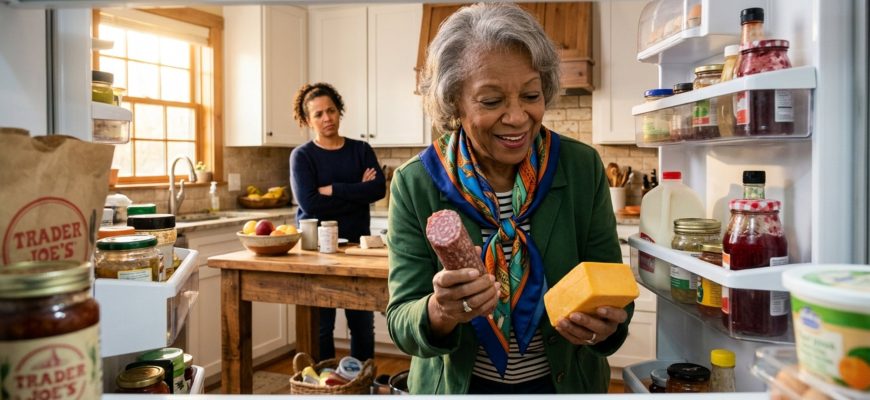
“Where did the cheese go? I bought a whole block last night—about fourteen ounces of American cheese. I specifically picked it up so I wouldn’t have to cook breakfast.”
Emily stood in front of the open refrigerator, a dull, simmering irritation rising in her chest. Cold air spilled out over her face, yet her cheeks burned. On the middle shelf, where a solid yellow-wrapped brick of cheese had rested just hours earlier, there was now only half a lemon and a small jar with a smear of tomato paste clinging to the sides.
“Maybe you ate it and forgot?” Michael’s voice drifted in from the living room, where he was hunting for his second sock before work. “Or maybe I got up in the middle of the night… No, actually, I just grabbed some water. Em, why turn a piece of cheese into a crisis? If it’s gone, it’s gone.”
She shut the refrigerator door slowly. The click echoed through the quiet kitchen, louder than it should have. It wasn’t about the cheese. Nor about the sausage that had vanished three days earlier. Not even about the expensive jar of instant coffee that had somehow emptied by half while both of them were at work. What unsettled her was something deeper—she was beginning to question her own memory. She clearly remembered unpacking the grocery bags, arranging everything neatly, planning meals for the week ahead. And then, little by little, the food disappeared. Quietly. Gradually. As if erased.
“Michael, I couldn’t have eaten a pound of cheese overnight,” she said, walking into the room and drying her hands on a towel. “And neither could you. We’d feel sick. Something else is going on.”
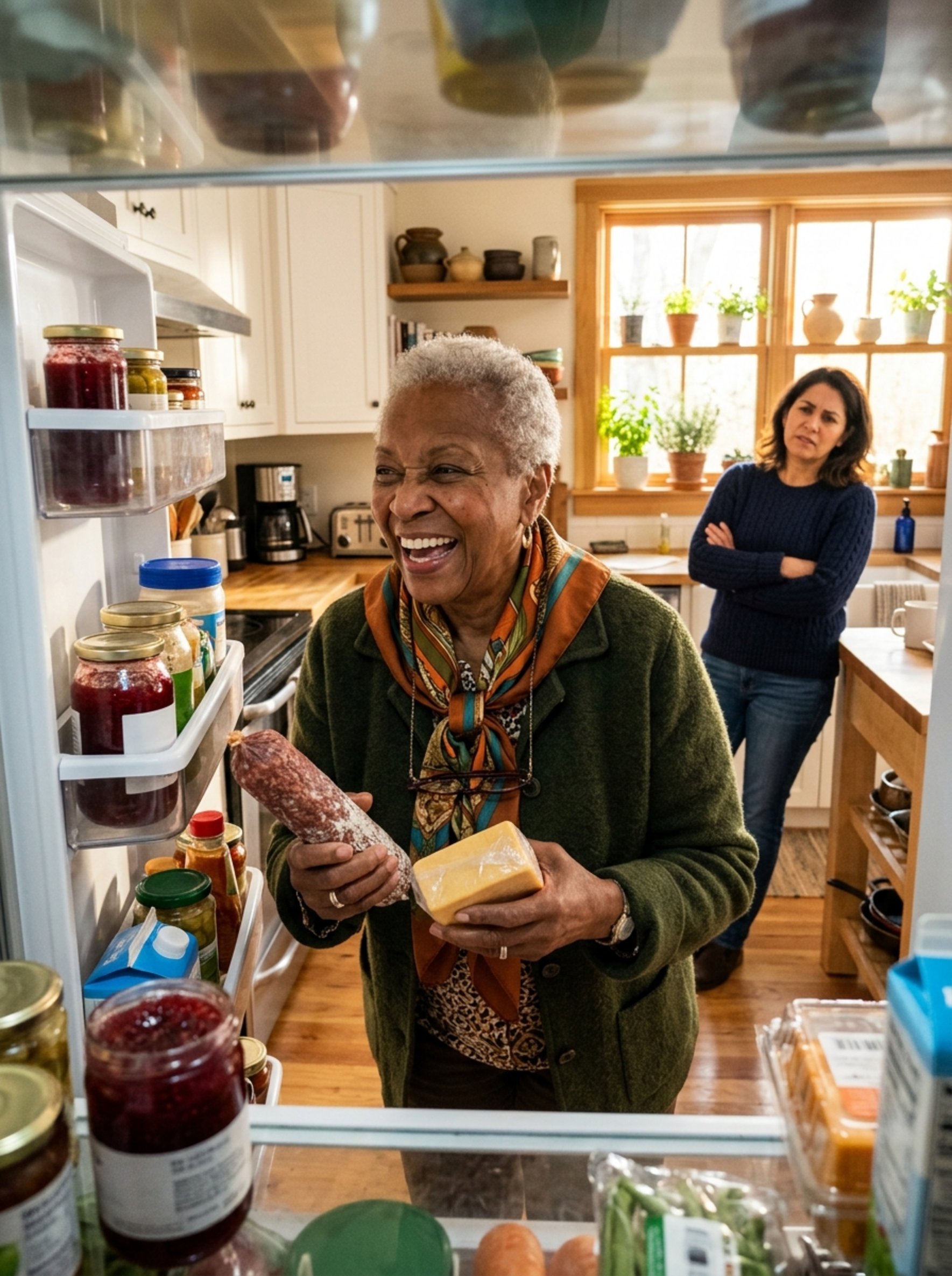
He finally retrieved his sock from under the couch and pulled it on with a grunt. Michael was, in most respects, a good husband—steady, hardworking, allergic to conflict. His one blind spot, which he preferred to call loyalty, was his mother, Linda.
“Here we go again,” he sighed, giving Emily a weary look. “What are you suggesting? That we’ve got a ghost raiding the fridge? Or that Mom is sneaking food out? Em, that’s ridiculous. She’s retired, she gets her Social Security. She’s not struggling. She stops by to water the plants and feed Oliver while we’re at work. She’s helping us. And you…”
“I’m not saying anything,” Emily cut in, though that was exactly what she had been thinking. “I just find it strange. The groceries vanish on the same days she comes over. Last Tuesday—a whole stick of summer sausage. Thursday—the chicken breasts I’d thawed for cutlets. Now the cheese.”
“Maybe she moved things around,” Michael said, standing and straightening his shirt. “Or maybe Oliver dragged something off?”
“The cat opened the refrigerator, unwrapped vacuum-sealed cheese, and hid it?” Emily raised an eyebrow. “Please. Be serious.”
“I’m late,” he replied quickly, clearly eager to escape the conversation. He kissed her cheek. “We’ll buy more tonight. Don’t get worked up. Mom’s practically a saint—she’d give away the shirt off her back. And you’re hinting she’s stealing? That’s not fair, Em.”
After the door closed behind him, Emily sank onto the small bench in the hallway. Shame prickled at her. Linda always looked so fragile and harmless—an old wool coat, a knitted beret, endless complaints about blood pressure and the cost of prescriptions. She lived in the next building and had a spare set of keys to their apartment “just in case,” at Michael’s insistence. At first Emily had agreed—it was practical if a pipe burst or the iron was left on. But lately those “just in case” visits had grown suspiciously frequent.
Emily worked as an accountant for a large construction company. Precision was second nature to her; balancing numbers was practically instinct. Perhaps that was why she couldn’t ignore the pattern. She tracked their spending carefully. They were saving for a new car, so their grocery budget was planned down to the dollar. Yet over the past two months, that category had quietly ballooned. Money slipped away, and the refrigerator remained inexplicably half-empty.
That evening she stopped by the supermarket. Prices felt outrageous. She lingered at the deli counter, debating which roast to buy. Michael loved meat sandwiches for breakfast. With a resigned sigh, she chose a smaller portion than usual. Cutting back meant sacrificing her own favorites—kefir instead of her preferred yogurt, pollock instead of trout.
At home, she unpacked the bags with deliberate care. This time, she decided, she would test her suspicions. Taking a permanent marker, she placed tiny, nearly invisible dots on the bottom of a pricey pâté jar and along the edge of the butter wrapper. It felt childish, like something from a spy movie, but she needed proof—one way or the other.
The next two days were uneventful. Linda did not stop by.