
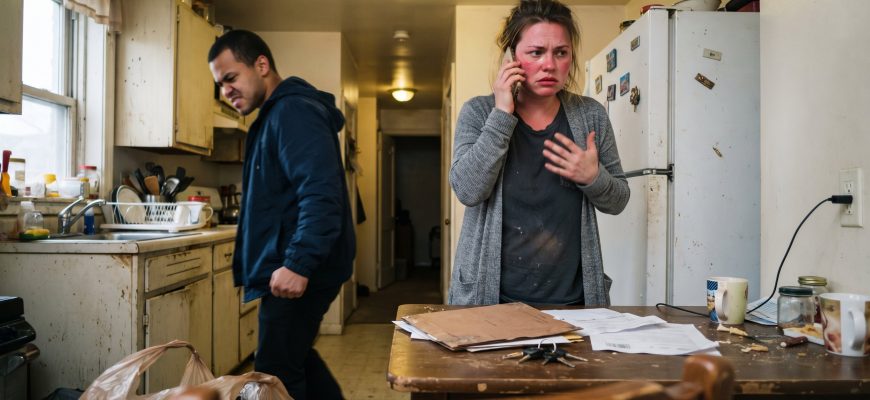
“Michael already gave us the key, so open the house and don’t put on a show,” Jessica said. “We’re moving in tomorrow. Two rooms for us, the shed for Ryan’s tools, and you only show up there on weekends anyway.”
Emily had the phone on speaker. In the kitchen, beside the refrigerator, her husband Michael stood staring far too intently at the door, as if the little Santa Fe magnet on it had suddenly become fascinating.
“Michael gave you a key to my house?” Emily asked.
Jessica let out a laugh so sharp that Michael heard it too.
“To your family house, Emily. Stop slicing everything into ‘mine’ and ‘yours.’ You’re my brother’s wife, not some random woman off the street. We have kids. Our lease is ending. We need somewhere to live.”
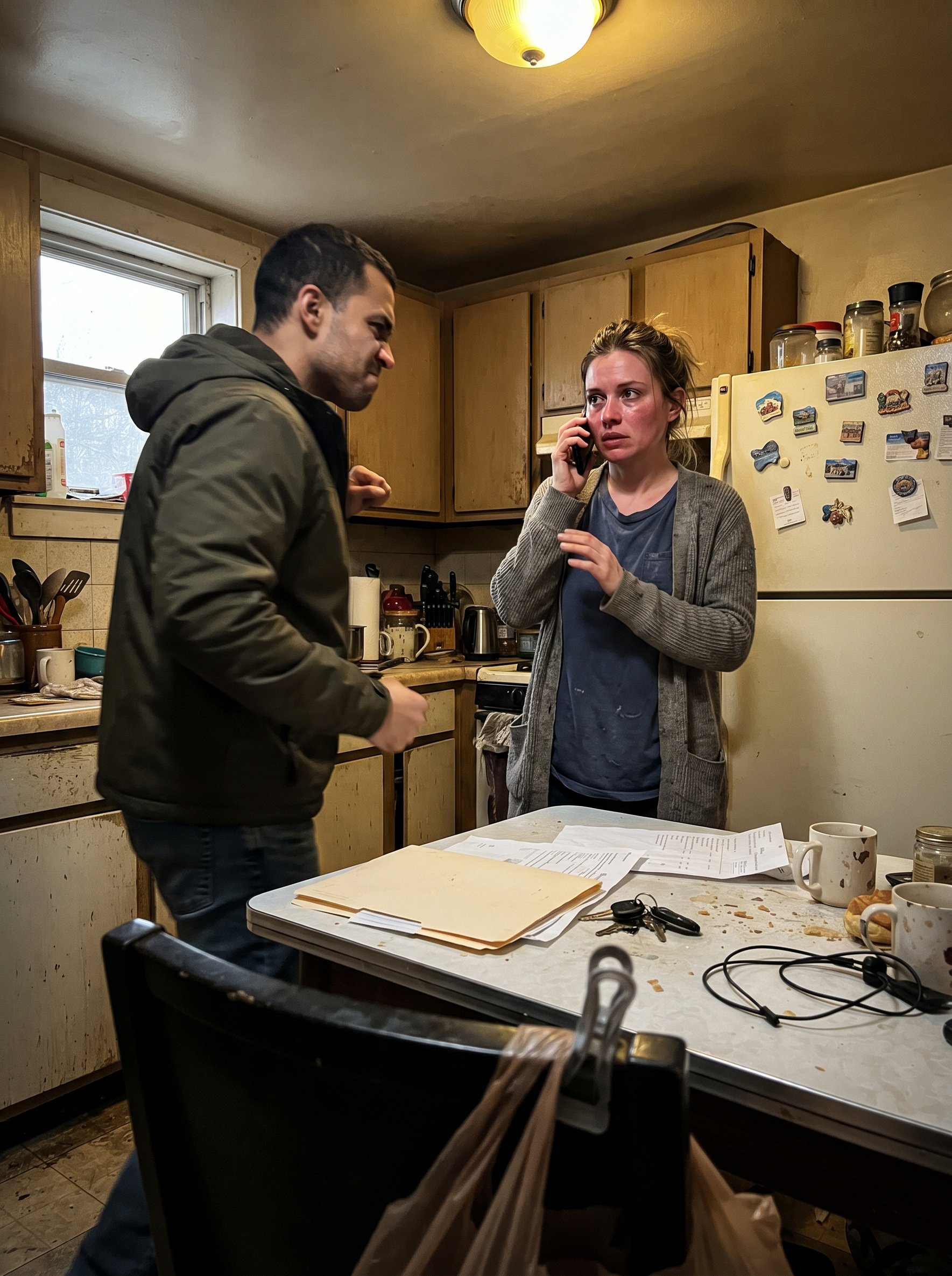
“Then find a place,” Emily replied. “You are not moving into my house.”
Michael’s head came up at once.
“Em, don’t start. Jessica wouldn’t ask if she had another choice.”
“She isn’t asking. She’s announcing.”
“Because we’ve already talked it through,” Jessica cut in quickly. “Mom said nine hundred square meters of land is too much for one person. The house is big, 96.4 square meters, so you’ll survive. Olivia needs her own room, Ethan needs space too, and Ryan will straighten up the yard. You’ll end up thanking us.”
Emily looked at Michael. He looked away.
That was when the most important part became obvious: Michael’s sister had not made this decision in a panic. Someone had already promised her the house. Without Emily. Behind Emily’s back. With a key, assigned bedrooms, and a shed Ryan had probably already filled in his imagination with his endless collection of tools.
“Jessica, tomorrow you’ll be met at the gate by the owner’s refusal,” Emily said. “If you try to enter, I’m calling the police.”
For a second, the line went silent. Then Jessica laughed again, this time with open contempt.
“The police? On family? Well, now we know who you really are. Michael, are you hearing your wife?”
Michael heard. And for the first time that evening, he stopped pretending he was not involved.
“Emily, you’re going too far. They have children.”
“They also have parents, jobs, a husband and wife in that family, and a responsibility to solve their own problems.”
“You talk about them like they’re strangers.”
“As residents of my house, they are strangers.”
Michael slapped his palm against the table. Not hard, more for the noise than the force.
“We’ve been married eight years. I’ve been there too. I’ve helped there too. I get a say.”
“You’ve visited, yes. But you do not get a vote on what happens to the property.”
He straightened as though she had struck him, although Emily had said nothing but the truth. The country house in the Birchwood community had come to her through a gift deed in May 2019. The house and the lot were legally in her name. Michael entered the picture later. At first he came as a guest, then he began inviting friends, then he handed a spare key to his mother “just in case.” Back then, Emily had chosen not to turn a key into a family war.
Now that “just in case” had arrived in the form of Jessica, her husband Ryan, two children, and a vehicle packed with belongings.
“You want to destroy our relationships over a weekend house?” Michael asked.
“It is not a weekend house for your entire family. It is my home.”
“Back to paperwork again.”
“Yes. Because verbally, all of you have already divided it up.”
Michael snatched his jacket from the back of the chair.
“I’m going to Mom’s. Call me when you cool off. Jessica is coming tomorrow anyway, and you are not going to humiliate me in front of the kids.”
“I won’t humiliate anyone,” Emily said. “I’ll document it.”
He slammed the door behind him. Emily remained alone in the kitchen, and for the first time all evening, breathing felt a little easier. Not peaceful—no. But at least the situation had become clear. This was not something that could be fixed by persuasion.
She took a folder from the cabinet: the gift deed, the county property record, the parcel number, the household receipts. Then she opened her messages. Jessica had already sent another one: “We booked a moving truck for tomorrow. If you throw a fit, that’s on you.”
A message from Michael followed: “I gave her the key. Don’t embarrass me.”
Emily took screenshots, emailed copies to herself, and called David, the local police officer. She still had his number from an incident the previous year in the community, when someone had broken into a neighbor’s shed.
David listened without reacting and immediately separated the family noise from the legal facts.
“You’re the owner of the house and the lot?”
“Yes.”
“Are they registered there? Have they lived there permanently? Is there a lease or written consent from you?”
“No. Nothing like that.”
“Then keep your documents with you tomorrow. If they come and start opening the gate or carrying things in after you refuse them entry, call dispatch. Don’t shove anyone, don’t try to snatch the keys away, and don’t argue with the movers. Just state clearly, in front of witnesses, that you do not consent to their entering or living there.”
“They’ll yell that it’s a family dispute.”
“Let them yell. The police don’t decide ownership.”