
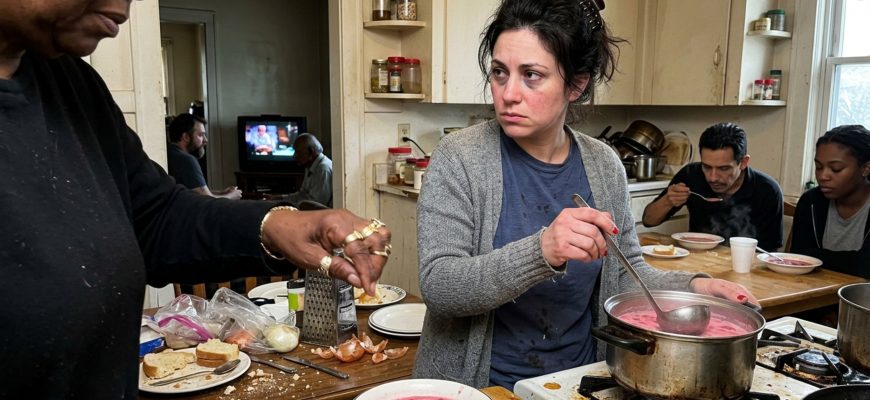
“Mom, Dad, Brian and Megan are coming on Saturday. They’ll stay with us for a month.”
Kevin said it casually, as if he were mentioning the weather. He was standing by the refrigerator, drinking kefir straight from the carton while scrolling through his phone.
I was holding a plate. I set it down on the table very, very carefully.
“A month,” I repeated.
“Yeah. Dad’s on vacation, Mom’s been wanting to visit for ages. Brian will come too, with Megan. We’ll all spend some time together.” He smiled without looking away from the screen. “It’ll be fine.”
Fine. We had been married seven years. In that time, his relatives had stayed with us four times. Every visit lasted more than a week. Every visit came without warning. Well, almost without warning. Three days counted as notice, didn’t it?
I work from home as an accountant. My office is an eight-square-meter room beside the bedroom: desk, computer, folders, everything arranged down to the inch because our apartment has only two rooms. It is not a mansion.
“Kevin,” I said, forcing my voice to stay even, “there are two of us. Two rooms. Where exactly are we putting four grown adults?”
At last, he lifted his eyes from the phone.
“Mom and Dad can sleep on the sofa in the living room. Brian and Megan can take your office. We’ll buy an air mattress.”
“And where am I supposed to work?”
“At the kitchen table.” He gave a small shrug. “Or in the bedroom. You have a laptop.”
I just stood there, staring at him. He had not asked me. Not whether I agreed, not how I felt about it. He had simply informed me, as though the apartment belonged to him and I was some convenient accessory that came with it.
“You could have discussed this with me first,” I said.
“What’s there to discuss? They’re my parents. They’re not strangers.”
Not strangers. No. But not mine, either. I drew in a breath and let it out slowly.
“All right,” I said. “Then here’s my condition. You cook. You clean. They’re your guests, so you take care of them.”
Kevin laughed, like I had made a joke.
“Laura, come on. Mom will cook everything herself. She likes cooking.”
I said nothing.
For six months, I had been saving money. Every month I put away about $75 or $90 from freelance jobs I took on top of my regular work. Evenings, nights, whenever I could. I balanced other people’s books so I could afford a vacation. A real one—by the sea, somewhere quiet. A little over $500 sat on a separate card.
My small escape fund. Back then, I had no idea I would need it so soon.
They arrived on Saturday. All four of them. Three suitcases, two bags, and several discount-grocery sacks containing three jars of pickles and a package of buckwheat. A gift, apparently.
Barbara came in first. She was a large woman with rings on every finger and a voice loud enough to startle the neighbor’s cats. She inspected the entryway as if she were signing off on a renovation.
“It’s cramped in here,” she said instead of hello. “And this wallpaper again? I told you last time it had to go.”
“Hello,” I answered.
My father-in-law, Robert, a quiet, almost invisible man, nodded at me and immediately drifted toward the television. Brian, Kevin’s older brother, squeezed through the doorway sideways. Megan followed him—thin, silent, her eyes fixed on the floor as usual.
Kevin bustled around, carrying suitcases, shifting furniture in my office, spreading out the air mattress. It swallowed half the room. My desk was shoved against the wall so tightly that the chair no longer fit.
“I work in there,” I told Kevin in the kitchen.
“So you’ll work at the kitchen table for a while. It’s temporary. Just one month.”
Just one month. Two hundred and forty working hours at the kitchen table, beside pots, pans, and my mother-in-law.
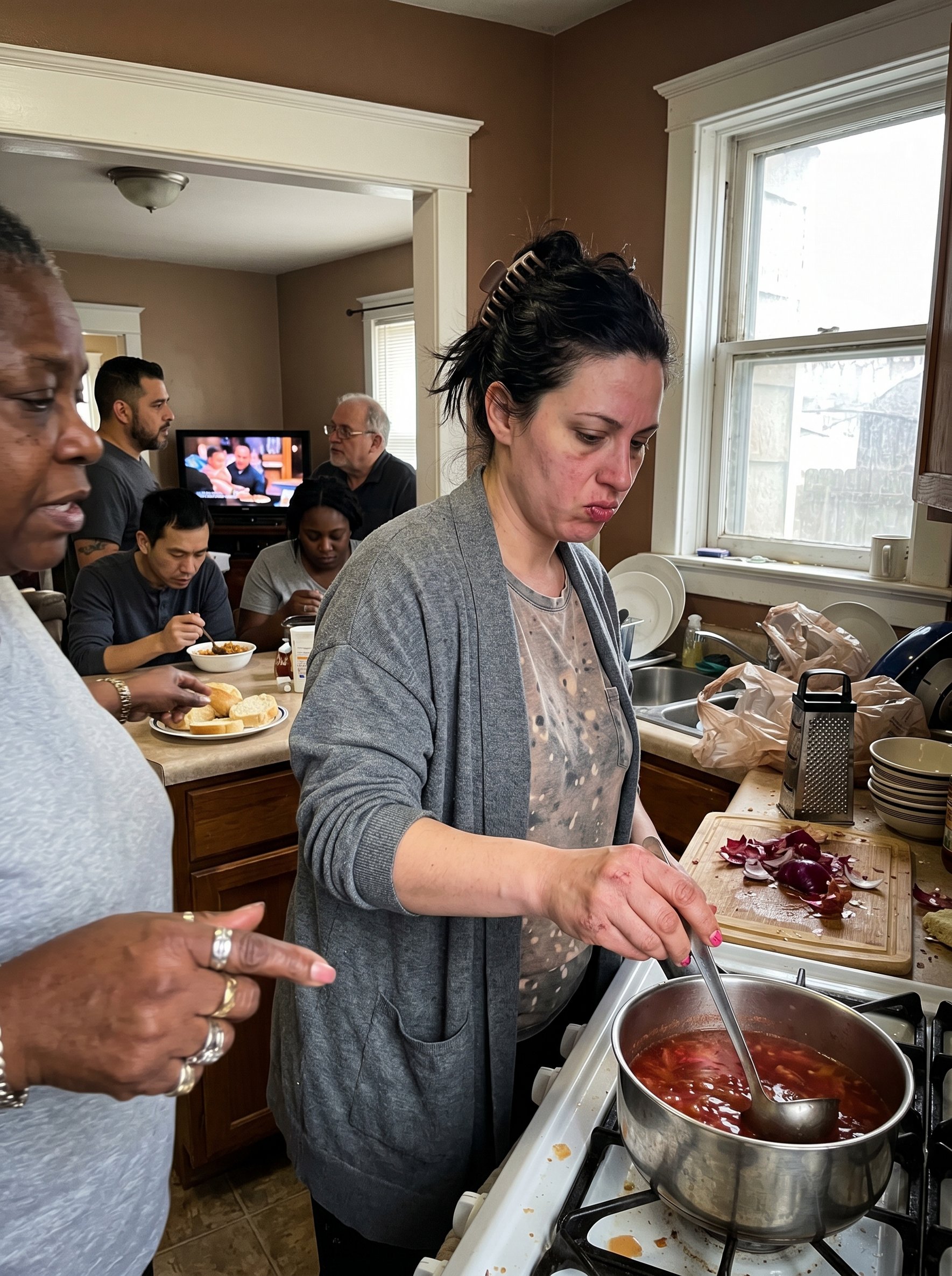
I spent the first day at the stove. Barbara did not cook. She supervised. She sat on a stool, folded her arms, and began issuing instructions.
“Chop the onion smaller. Big pieces of onion don’t belong in soup. That’s slop.”
“Grate the carrot. Don’t dice it. Who taught you to do it like that?”
“That’s the wrong oil. You need unrefined. Kevin, write that down so your wife buys the right kind.”
For three hours I stood over the stove. I roasted the beets in the oven the way I always do, to keep the color bright. Barbara leaned over the pot, sniffed, and wrinkled her nose.
“Borscht is supposed to be dark. This is pink water.”
I kept quiet. Kevin was in the living room with his father, watching soccer. The agreement that he would cook had lasted exactly twelve hours.
Brian ate enough for three people: one bowl of borscht, then another, then half a loaf of bread. Megan picked at her food with her spoon. Barbara ate while criticizing every bite.
“Too salty,” she announced.
Robert silently helped himself to seconds. I chose to consider that a compliment.
By evening, I had washed dishes for six people. Twenty-two items in all: plates, cups, pots, and a frying pan. Kevin was watching a show. Brian was snoring in the middle of my workspace.
I sat down on the bed in our room and opened my laptop. An urgent report was waiting; the client needed it by Monday. The lamp glared against the screen, and the surface was too low, so I had to wedge a pillow under my elbows.
Through the wall, I heard Barbara telling Kevin that “his wife could at least smile.”
I caught every word.
“She’s tired, Mom,” Kevin said.