
A whole flood.
“You’ve lost your mind.”
“Mom is crying.”
“Who’s supposed to cook now?”
“Give the money back.”
“Laura, this isn’t funny.”
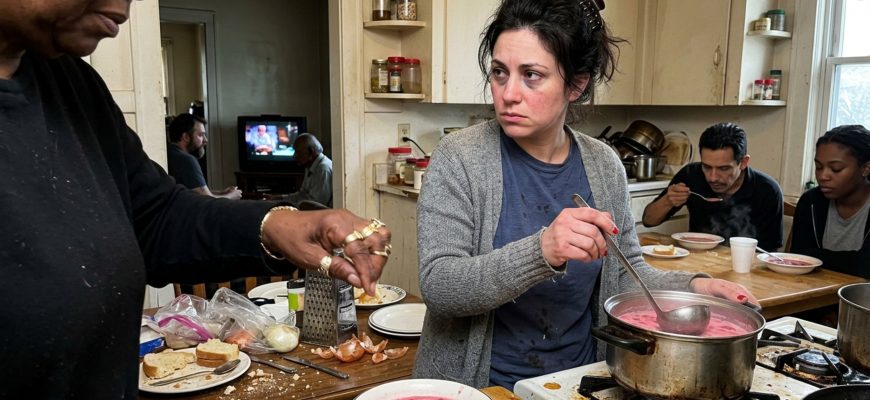
I read every single one. Especially the one about cooking. For twelve days, I had fed six people. Forty-eight hours in the kitchen. About $240 out of my own pocket. And the first thing anyone wanted to know was who would make dinner.
I powered off the phone, dropped it into my bag, and a minute later they announced boarding.
On the plane, I took my window seat and buckled myself in. The woman beside me, around fifty and beautifully tanned, gave me a friendly smile.
“Vacation?”
“Vacation,” I said.
And I smiled so hard my cheekbones hurt. I couldn’t remember the last time I had done that.
The plane gathered speed, lifted, and the city slipped away beneath us—rooftops, highways, traffic. Somewhere down there, in our one-bedroom apartment, Barbara was probably reading my note. Kevin was rubbing the bridge of his nose. Brian was asking where breakfast was.
And I was flying toward the ocean.
For the first three days, I slept. That was all I did. I slept twelve hours at a stretch, because for the twelve days before that, I’d been getting maybe five. The hotel was quiet, the room was small, and the balcony overlooked the pool. No one woke me at six-thirty. No one demanded soup. No one stood over me criticizing the way I chopped onions.
On the fourth day, I turned my phone back on.
One hundred fourteen messages. Thirty-two missed calls.
Eighteen from Kevin. Seven from Barbara. Three from Brian. Four from my mother, whom Barbara had apparently called so she could complain.
I opened Kevin’s messages first and read them in order.
Day one was anger.
“You betrayed me.”
“How could you do this?”
“Mom is sobbing.”
Day two was bargaining.
“Fine, come home and I’ll talk to Mom.”
“Don’t you think this has gone far enough?”
Day three was panic.
“Laura, I don’t know how to make soup.”
“Mom is making me cook.”
“Brian says he’s leaving if there isn’t decent food.”
I read that last one twice.
Brian, the man who had not washed a single plate in twelve days, was threatening to leave if nobody fed him.
Then I opened Barbara’s messages.
The first one said, “Snake!”
The second: “My poor Kevin!”
The third: “I’m going to tell everyone what kind of woman you are!”
The fourth was a voice message, three minutes long. I listened to thirty seconds. That was enough.
I sent Kevin one reply.
“I’m on vacation. I’ll be back in twenty-four days. Groceries are sold at the store across the street.”
Then I texted my mother.
“Mom, I’m fine. I’m resting. Don’t listen to Barbara—she has her own version of events.”
After that, I switched the phone off again and went to the beach.
The water was warm and salty. I floated on my back, looking up at the sky, and realized I hadn’t swum in the ocean for seven years. All that time, the money had gone to transfers for Kevin’s parents, repairs for their cabin, holiday gifts for his relatives. My vacation had been postponed every year with the same promise: next year, definitely, Laura.
Well, next year had arrived.
Without Kevin. Without Barbara. Without thirty-four plates after dinner.
I stayed in the water for two hours. Then I got out, stretched out on a lounge chair, and ordered coffee. The waiter brought it in a tiny cup with a cookie on the side. I wasn’t in a hurry. There was no soup to make.
Halfway through the second week, a message came from Kevin.
It was short.
“They left.”
I didn’t ask for details. I didn’t ask when, or why, or what had finally happened. I simply read it and put the phone away.
On the twentieth day, he wrote again.
“We need to talk when you get back.”
No exclamation points. No accusations. Just that—we needed to talk.
I answered, “Yes. We do.”
A month passed.
I came home tanned, rested, and with about $45 left on my card.
Kevin met me at the airport. He took my suitcase without a word. We didn’t speak in the car.
The apartment was clean. Suspiciously clean, as if he had made a point of scrubbing it before I arrived. The furniture was still where it belonged. The ficus on the windowsill was alive and had even been watered. The air mattress had been removed from the office.
“When did they leave?” I asked.
“A week after you did.”
One week.
That was exactly how long they had lasted without service. Without cooking, cleaning, grocery runs, and someone silently absorbing all the inconvenience. Seven days—and they packed their bags.
“Mom said she’ll never set foot here again,” Kevin added.
“I see.”
He sat down on the couch and started to rub the bridge of his nose, but stopped almost immediately, as if he had caught himself doing it.
“You could have just said something,” he muttered.
“I did say something. For twelve days. You didn’t hear me.”
“But leaving like that was too much.”
“And inviting four people for a month without asking me was normal?”
He had no answer.
We didn’t make up. We didn’t hug. We didn’t tell each other everything was fine.
Right now, Kevin sleeps in the living room. We speak briefly, only about practical things—who’s paying the electric bill, who’s buying milk. Barbara calls him every evening. Through the wall, I can hear her telling her friends that her daughter-in-law “abandoned her husband and ran off to a resort.” In her version, there are no dirty plates, no endless cooking, no forty-eight hours at the stove.
And I sleep alone in the bedroom.
It’s quiet.
Nobody wakes me at six-thirty. Nobody comments on how I cut onions.
So tell me—did she go too far by leaving? Or if a husband doesn’t bother asking first, should he be the one left to deal with the mess?